





-
Research Report on the Practice of Tax Administrative Reconsideration (2026)
The administrative reconsideration system is an important support of China's administrative rule of law system. It is not only the core mechanism to resolve administrative disputes, but also the legal way for administrative organs to correct themselves. It is also the key institutional link to promote the modernization of national governance system and governance capacity. The new Administrative Reconsideration Law, which came into effect on January 1st, 2024, for the first time included "giving full play to the role of administrative reconsideration as the main channel to resolve administrative disputes", which provided a solid institutional support for the functional orientation and practice of administrative reconsideration. According to the data in the White Paper on Administrative Reconsideration (2024) published by the Ministry of Justice, in 2024, administrative reconsideration organs at all levels in China received 749,600 new administrative reconsideration cases, up by 94.7% year-on-year, which was 2.5 times that of administrative cases in the first instance of the court in the same period, which fully reflected the continuous consolidation of the position of administrative reconsideration as the main channel in resolving administrative disputes.

Feb. 6, 2026, 2:01 p.m.
8827Views
-
Research Report on Judicial Adjudication Trends of Tax-related Crimes (2026)
In March 2024, the Supreme People's Court and the Supreme People's Procuratorate jointly issued the Interpretation on Several Issues Concerning the Application of Law in the Handling of Criminal Cases Endangering Tax Collection and Administration (Judicial Interpretation No. 4 [2024]), which made a substantive restriction on the determination of the crime of falsely issuing special value-added tax invoices that has long been controversial. It clearly excluded false issuing behaviors that "are not for the purpose of defrauding or offsetting tax and do not cause losses of tax due to deduction" from the scope of this crime, and at the same time triggered adjustments in the application of charges for invoice-related crimes. In addition, the Supreme People's Court has refined adjudication rules through various means such as issuing authoritative interpretation articles, typical cases, and judge training materials, which has aroused sustained attention from both theoretical and practical circles.
Feb. 4, 2026, 3:39 p.m.
7995Views
-
Agricultural Products Industry Tax Compliance Report (2026)
Advancing the work concerning agriculture, rural areas, and farmers is a top priority in state governance and the cornerstone for stabilizing people's livelihoods and fortifying the foundation of economic and social development. As the core industrial vehicle for rural development, the agricultural products sector is deeply integrated into the processes of rural revitalization and agricultural modernization, occupying a pivotal strategic position in the nation's overall development. To support rural development, the state has introduced a series of targeted tax incentives for the agricultural products industry, including VAT exemptions for self-produced agricultural products and corporate income tax exemptions for primary processing projects. Concurrently, while supporting industry growth, the state continues to strengthen tax oversight. On one hand, eight government departments are coordinating efforts to intensify crackdowns on tax-related crimes within the agricultural products sector. On the other hand, tax authorities are deeply implementing the “Foundation Strengthening Project” for tax collection and administration, focusing on advancing digital upgrades and intelligent transformations in tax administration to achieve comprehensive, meticulous oversight of the agricultural products industry. Furthermore, due to industry-wide challenges such as ambiguous definitions of agricultural tax concepts and limitations in input tax credit policies, the sector faces persistently high tax risks. Tax disputes remain commonplace, and criminal cases involving fraudulent agricultural invoicing occur frequently. Against this backdrop, proactively establishing and continuously refining tax compliance systems has become essential for market entities in the agricultural sector to achieve stable operations and drive high-quality, sustainable development.
Drawing upon extensive practical experience and in-depth industry observation within the agricultural products sector, the Huashui team has compiled the Agricultural Products Industry Tax Compliance Report (2026). This report examines the tax regulatory environment for agricultural products, focuses on typical tax-related cases within the industry in 2025, and proposes strategies for mitigating tax risks along with practical implementation recommendations. It aims to provide valuable insights and professional guidance for building tax compliance systems and achieving high-quality development within the agricultural products industry.
Feb. 2, 2026, 1:15 p.m.
7465Views
-
Tax Compliance Report of Precious Metals Industry (2026)
Precious metals such as gold and silver, as a special category with commodity, financial and monetary attributes, occupy a core position in the global economic structure and national industrial and financial security. In March 2025, the Ministry of Industry and Information Technology and other nine departments issued the Implementation Plan for the High-quality Development of Gold Industry (2025-2027), which defined nine core tasks of the high-quality development of gold industry in the next three years, aiming at solving the outstanding problems such as insufficient resource support capacity and the difficulty in meeting the demand for key core technologies and equipment, and guiding China's gold industry to improve its high-end, intelligent, green and safe development level.
Jan. 26, 2026, 10:57 a.m.
7490Views
-
Compliance Report on Import Tariffs in Foreign Trade (2026)
The global trade landscape and regulatory system are undergoing continuous changes. The high-quality development of the domestic economy has placed new demands on the optimization and upgrading of import trade, leading to a series of important adjustments in legislation, policies, and regulatory practices in the field of tariffs. In 2024, the *Customs Law* came into effect, marking the transition of China’s tariff system from administrative regulations to national legislation. At the same time, the island-wide customs closure operation of the Hainan Free Trade Port has entered a substantial phase, the regulatory environment for new cross-border trade formats continues to improve, the development of "Smart Customs" is steadily advancing, and multi-agency joint enforcement mechanisms are becoming normalized. While these changes bring new market opportunities and customs clearance conveniences to enterprises, they also enhance the overall efficiency and professional depth of customs supervision.
Jan. 23, 2026, 10:37 a.m.
7015Views
-
Pharmaceutical Industry Tax Compliance Report (2026)
Tax risks in the pharmaceutical industry are closely intertwined with commercial bribery, presenting the typical industrial characteristic of the interweaving and coexistence of fraudulent invoicing violations and commercial bribery, and boasting distinct industry-specific features. In 2025, regulatory authorities further advanced the anti-corruption work in the pharmaceutical industry in depth, with multiple departments including the Central Commission for Discipline Inspection, the National Health Commission and the State Administration for Market Regulation collaborating to take targeted actions. They explicitly listed commercial bribery as a key crackdown area and adopted a regulatory model of "investigating both bribery and acceptance of bribes and imposing two-way accountability" to continuously investigate and punish illegal and irregular acts in the pharmaceutical industry with a stringent stance. Stock exchanges and the China Securities Regulatory Commission focused on the authenticity and rationality of promotion services provided by listed pharmaceutical enterprises, and built an all-round regulatory defense line through regulatory inquiries and inspections.
Jan. 19, 2026, 1:43 p.m.
8106Views
-
Tax Compliance Report of Coal Industry (2026)
During the "the 14th Five-Year Plan (2021-2025)" period, China's energy structure has been continuously optimized, and coal's basic guarantee and system adjustment role in the energy supply system has continued to play. At the tax level, there are tax compliance problems that can't be ignored in many aspects such as coal mining, transportation, sales and coal use. In recent years, with the digital and accurate efficiency of tax collection and management greatly improved, industrial enterprises are faced with different levels of tax-related administrative and criminal risks. It is an inevitable requirement for industrial enterprises to have a comprehensive insight into the trends of tax collection and management and identify the compliance points of multiple taxes.
Jan. 16, 2026, 2:48 p.m.
7604Views
-
Compliance Report on Real Estate Land Value Increment Tax and Enterprise Income Tax (2026)
In 2025, China's real estate industry maintained an in-depth adjustment trend, with the market showing distinct structural differentiation characteristics amid contraction. Nationwide real estate development investment and new commercial housing sales volume both saw significant corrections compared to the peak in 2021, and the development climate index remained in a low range. Regional market differentiation intensified: core cities maintained certain market vitality relying on resource endowments, while some cities faced sustained de-stocking pressure. Against this backdrop, the central and local governments have formed a policy synergy. On one hand, targeted tax reduction measures have been implemented to alleviate enterprises' capital pressure, such as reducing the pre-collection rate of Land Value Increment Tax (LVIT), optimizing deed tax incentives, and clarifying tax exemption conditions for ordinary residential properties. On the other hand, focusing on standardized tax administration, the State Taxation Administration issued the "Announcement on Several Administrative and Collection Guidelines for Land Value Increment Tax," unifying key rules including the connection between pre-collection and liquidation, and standards for deductible items. However, the formal legislation on LVIT has not yet been finalized. The regulatory system centered on the Interim Regulations and Implementing Rules can no longer fully adapt to the complex industry practices, and the problem of significant differences in regional implementation standards has not been fundamentally resolved. Coupled with the strengthened cross-departmental data sharing and full-process risk monitoring under the digital transformation of tax administration, the risk of tax-related disputes for real estate enterprises continues to be prominent.
Jan. 12, 2026, 11:19 a.m.
9780Views
-
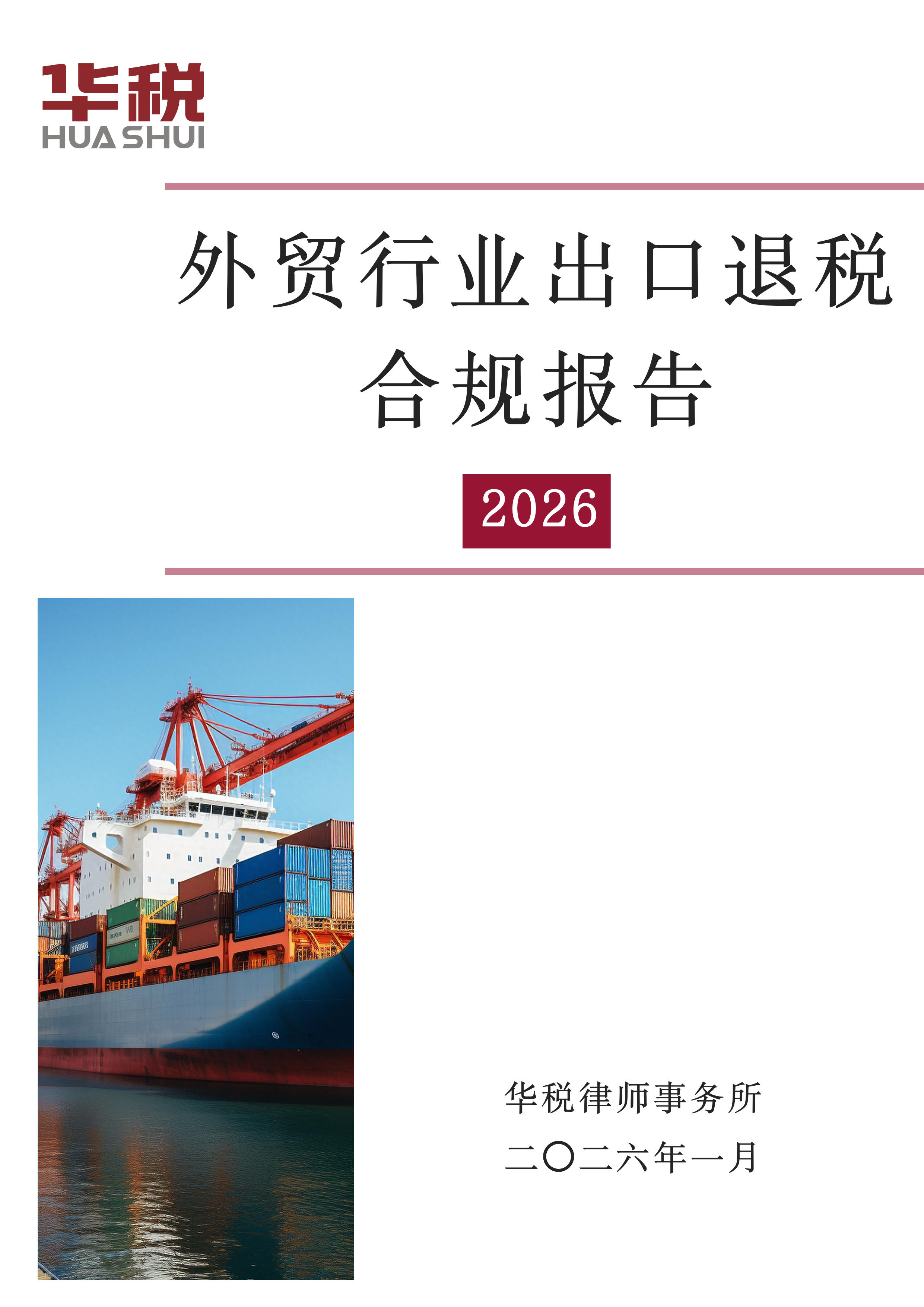
Compliance Report on Export Tax Rebates in the Foreign Trade Industry (2026)
Export tax rebate is an internationally prevalent taxation system. It refers to the refund or exemption of Value-Added Tax (VAT) and Consumption Tax already paid on goods during domestic production and circulation processes upon their customs declaration for export. This allows exported goods to enter the international market at tax-exclusive prices, thereby enhancing their competitiveness. The system also helps avoid international double taxation and promotes the development of foreign trade. In recent years, the state has continuously optimized export tax rebate services, with the application process being significantly streamlined and efficiency markedly improved. Concurrently, measures such as paperless customs clearance, foreign exchange management reforms, and facilitation of cross-border RMB settlement have been synergistically advanced, creating a more efficient and convenient business environment for export enterprises and effectively driving the growth of foreign trade.
Jan. 9, 2026, 10:36 a.m.
5361Views
-
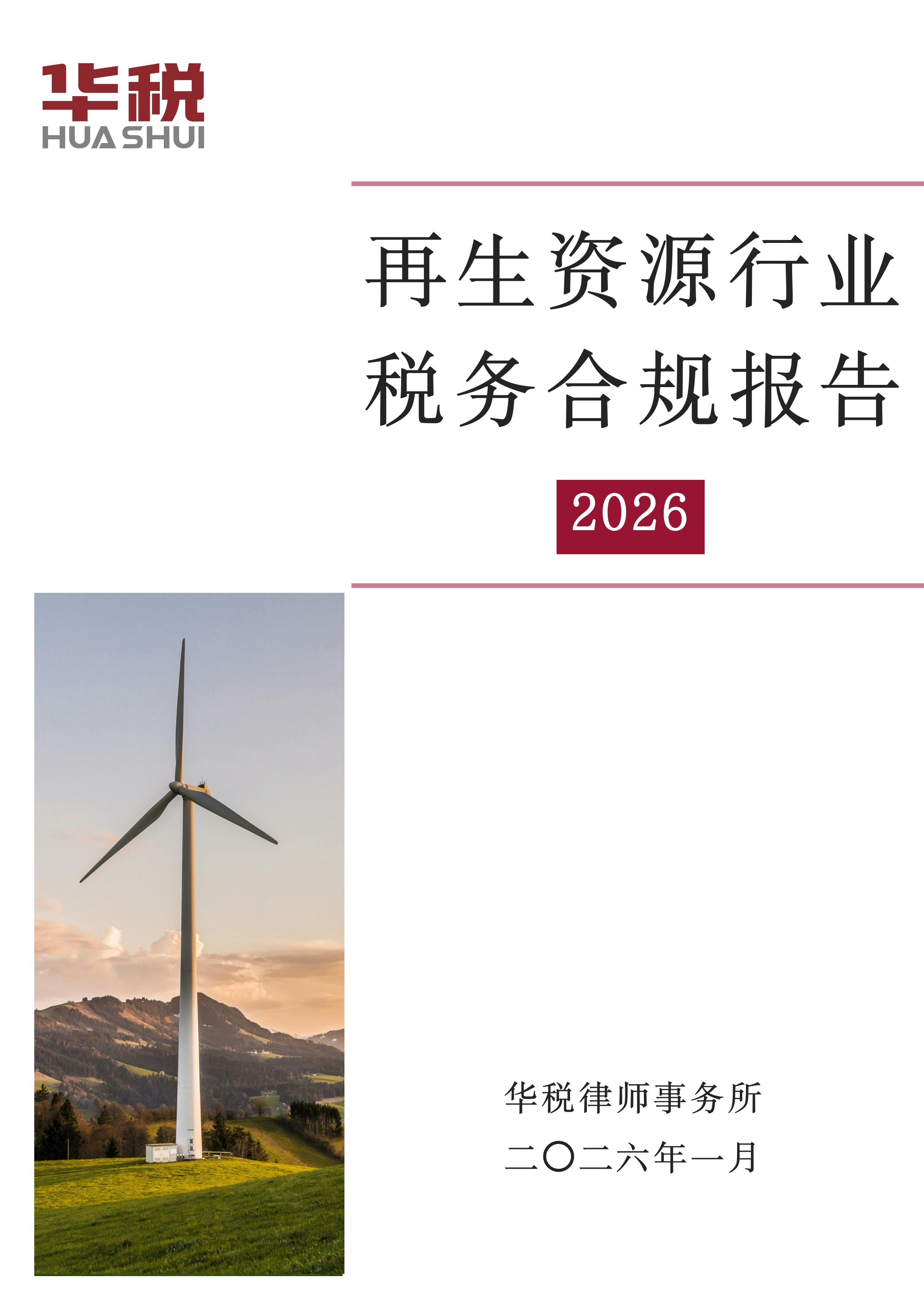
2026 Tax Compliance Report of Renewable Resources Industry
Developing resource recycling industry is an inherent requirement of high-quality economic and social development, which is conducive to improving the level of resource recycling, alleviating the pressure on resources and environment, enhancing the national resource security guarantee capacity and cultivating new kinetic energy for economic growth. At present, China has set up a complete and progressive medium-and long-term policy system for resource recycling, which provides clear planning guidance for industrial development. At the tax level, in recent years, the policies in the field of recycling and comprehensive utilization of renewable resources have been constantly changing, which has brought new development opportunities for industrial enterprises and also put forward higher tax compliance requirements. At the same time, with the great improvement of the efficiency of digitalization and accuracy of tax collection and management, it has become the key premise and inevitable requirement to have a comprehensive insight into the industry tax policy trends and systematically examine their own potential tax risks.
Jan. 5, 2026, 1:26 p.m.
9064Views



